
What’s in The Name?
Clifton H. Payne, Jr.
Shakespeare wrote, “What’s in a name? That which we call a rose, by any other name would smell as sweet.” “Words are a unit of language consisting of one or more spoken sounds or their written representation, that functions as a principal carrier of meaning,” as one dictionary defines it.[1] Words and names convey meaning and character. A name can be merely a descriptive but it can also convey something of the character of an individual beyond just being an identifier. In our western culture a name is usually just an identifier or a descriptive but in Biblical culture a name reveals something of the nature of the individual. Abram meant a father but Abraham meant a father of nations.
When Moses encountered the Creator of the universe on Mount Sinai, he asked him to know his name. God answered Moses and said,
Ex. 3:13 Then Moses said to God, “Indeed, when I come to the children of Israel and say to them, “The God of your fathers has sent me to you,’ and they say to me, ‘What is His name?’ what shall I say to them?”
Ex. 3:14 And God said to Moses, “I AM WHO I AM.” And He said, “Thus you shall say to the children of Israel, ‘I AM has sent me to you.’”
Ex. 3:15 Moreover God said to Moses, “Thus, you shall say to the children of Israel: ‘The Lord God of your fathers, the God of Abraham, the God of Isaac, and the God of Jacob, has sent me to you. This is My name forever, and this is My memorial to all generations.’
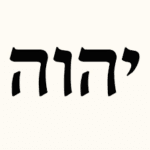
The word translated into English as LORD is the Hebrew name for God written in the four Hebrew letters “Yud, Hey, Vav, Hey (YHWH).” It is normally written in all capital letters in English translations. This is “the name” of God by which He is to be known. In the time of Moses, the name was commonly pronounced but more than a century before the time of Jesus the name ceased to be spoken out of reverence and for fear of taking His name irreverently or lightly. The name came to only be pronounced by the High Priest on the Day of Atonement. Since it has not been regularly pronounced for the past two thousand years scholars sometimes debate the exact pronunciation. It was probably pronounced “Yahweh.” The name seems to be a combination of I am; I was, I will be; in other words, the self-existent one. This is the name that is used most often of God when His compassion is being expressed.
Since the name was no longer pronounced in daily usage euphemisms were employed with the most common term being “Adonai” in Hebrew and in English “the Lord.” Other terms such as “The Power,” “Heaven,” and “The Name” were used in place of “Yud, Hey, Vav, Heh (YHWH).” We see this in the New Testament in the story of the prodigal son who upon returning to his father says, “I have sinned against Heaven and against you,” meaning that he had sinned against God.
Some of the ancient Sages also thought that not just the words but also even the letters and the spaces between the letters had meaning. I have been told that there is a tradition that when the Messiah comes, he will not only explain the text but the meaning of the letters and even the spaces in the text. In the original manuscripts there are odd spacings between words that have been copied for over two thousand years because they are in the oldest manuscripts but no one knows why they are there; but because they are there they are reproduced whenever a manuscript is copied because it is thought there must be some meaning to them.
Jesus said, Matt. 5:18 For assuredly, I say to you, till heaven and earth pass away, one jot or one tittle will by no means pass from the law till all is fulfilled.
Luke 16:17 And it is easier for heaven and earth to pass away than for one tittle of the law to fail.
In the Hebrew of the time of Jesus the “jot” would be the Hebrew letter “Yod” which is the smallest letter of the Hebrew alphabet and the “tittle” is the Hebrew word “Kotz” which means thorn and was used as decorations on the Hebrew letters “Yod,” “Vav” and “Lamed.” So according to Jesus’ statement there is meaning in not only the smallest letter of God’s Torah but also in the decorative barb upon the letter. Jesus seems to agree with Rabbinic teaching that there is meaning in scripture even in the way it is written.
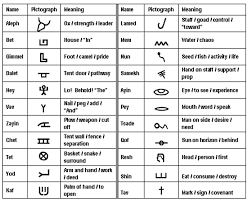
Recently I accidentally stumbled upon something that seemed to me to be too improbable to be a mere coincidence. I was preparing for a Bible study that I lead every week and I wanted an image of the name of God in Hebrew to show my students so, I searched the Internet for images of the name of God. In my search I came upon not only the Hebrew inscription of God’s name but also the original Hebrew script for the name of God. The Hebrew script that has been used for over the past two thousand years is not the same as the script that Moses used when the Torah was originally written. When Nebuchadnezzar destroyed the first Temple in 586 BC and the Jews were taken captive to Babylon, the Jews adopted the Aramaic script of the Babylonians. Aramaic and Hebrew are sister languages and use the same alphabet but they didn’t use the same characters to write the language. From the time of the destruction of the first Temple until now Hebrew has been written using the Aramaic characters instead of the original Hebrew letters, which are now termed Paleo-Hebrew. The original Hebrew script, or a close variant, is still used by the Samaritans in their version of the Torah. The original Hebrew script is close to the earliest Phoenician alphabet (which is thought to be the oldest written alphabet) and this script is pictographic. The Aramaic letters are like our English or Greek or Latin alphabets in the fact that the characters are just symbols that represent sounds. However, the original pictographic symbols represented sounds by pictures of words that already existed in common speech. For example, the letter “Yud” is represented by the picture of a “Yad” which means “hand or arm” in Hebrew. So, each letter has a pictorial meaning that represents a sound as well as the meaning of the combination of the letters to form words.
The ancient Sages used many methods of interpretation that many today would deem farfetched but they would look at every possible way to stretch a text for additional meaning. Sometimes this meant rereading a text with different vowels to extract additional meanings. The Kabbalist believe that every letter of the Hebrew alphabet has spiritual significance.
When I looked at the Paleo-Hebrew letters of the name of God I saw something that, at first, I thought was impossible. Here are the letters of the Name of God in ancient Hebrew and modern Hebrew:
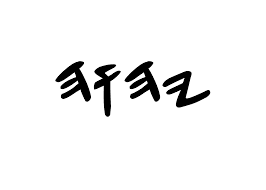
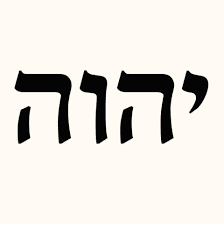
The upper letters are the way the name of God was written when Moses received the Torah on Mount Sinai and the bottom letters are the way the name of God is written in Hebrew from the time following the destruction of the first Temple. The chart below is one of many that illustrate the pictorial representation of the letters and their picture meaning. The “Yud” represents “hand” and the “Hey” represents “behold” and the “Vav” represents “a nail or tent peg.” The picture images of the letters of the name of God that was given to Moses hundreds of years before crucifixion existed is “Behold the nail and hand.” I find it truly remarkable that it could be possible to see in the pictures of the letters of God’s name an image of crucifixion. This is a type of reading into a text something that is not included in the meaning of the word. This would be called a Midrash or elaboration of the text. One could well say that this is nonsense but my question is what are the statistical odds that one could derive the meaning of nail and hand from the name that God gave to Moses over a thousand years before the Romans made crucifixion a common practice? It would seem to me that the possibility would be astronomical. Perhaps God built something into His name that would reveal His compassion and love for mankind in that He would one day pay the price for man’s redemption by hanging on a cross.
It would be amazing if this were the only instance of an original Hebrew letter adding additional meaning to the text but it would be even greater to see another instance where seeing the original Hebrew text amplified and clarified what the text was saying. In Ezekiel it is written:
Ezek. 9:4 and the Lord said to him, “Go through the midst of the city, through the midst of Jerusalem, and put a mark on the foreheads of the men who sigh and cry over all the abominations that are done within it.”
The word “mark” in the Hebrew text is not a word but simply the Hebrew letter “Tav.” It is translated “mark” because it is simply a letter and not a word. It doesn’t make sense until you see how the letter “Tav” was written in the original Hebrew. It is a cross (X or +). It was a cross that was put on their foreheads. These texts were written long before the time of Roman crucifixions but perhaps they reveal something in the mind of God from the foundation of the world. Perhaps God has hidden hints in His scriptures that reveal His plan and purpose from long long ago. And perhaps it is also interesting to note that just as certain letters in the scriptures are adorned with thorns, we see that the word of God, who was made flesh, was in His passion for us also adorned with a crown of thorns.
What’s in The Name? Perhaps more than we’ve ever known. Oh, how deep is the mystery of God’s love for us.
[1] Dictionary.com